
| Volatility | Base |
|---|---|
| Fragrance Notes | Aldehydic, Wood |
| Uses | Base note, oriental accords, woody blends, incense effects |
| Physical State | Oily, mobile liquid |
| Colour | Brown |
| Natural/Synthetic | Natural |
| Vegan Friendly | No |
Documents
Interesting Fact
Did you know the Agarwood was first
discovered as a fragrance over 1000 years ago?
discovered as a fragrance over 1000 years ago?
Odour Profile
Fatty, waxy, citrus-green aldehydic with soapy nuances
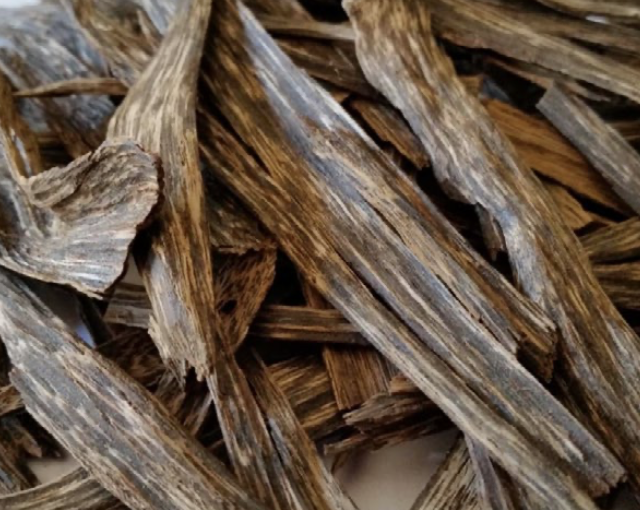
Dark, resinous, smoky-woody and balsamic, with leathery, tarry, earthy facets and a subtle sweet incense nuance. Depending on quality and composition, it can show ambered warmth, musky animalic depth, and faint medicinal or phenolic edges. The impression is powerful, tenacious, and richly textured, often used to evoke the complex, multifaceted character of natural oud without its full irregularity.
Agarwood is one of the most expensive natural perfume materials because only resin-infected Aquilaria wood is used; wild agarwood formation is a defense response to injury or fungal invasion, so not all trees produce it; much agarwood is now sourced from cultivated trees to reduce pressure on endangered wild populations; several Aquilaria species are protected under CITES, so international trade is regulated; “agarwood subs” in perfumery often means blends of materials designed to mimic the effect of natural agarwood, not a single ingredient; authentic agarwood extraction can yield fractions used in incense, attars, and fine perfumery, with different grades prized for different uses.
 Johns nose…
XXXX
Detailed Specification
| Chemical Class | Aliphatic Aldehyde |
|---|---|
| Formula | C11H20O |
| Flash Point | > 100 °C |
| Relative Density | 0.9800 - 1.0000 |
| Refractive Index | 1.4800 - 1.5000 |
Chemical Structure
Tel: +44-(0)1451-820698
Cotswold Perfumery Ltd
Victoria Street
Bourton on the Water
Cheltenham
GL54 2BU
England
Victoria Street
Bourton on the Water
Cheltenham
GL54 2BU
England

Shop Opening Hours
Monday to Friday (Spring Opening Times)
10.00am to 5pm
Saturday
9:30am to 5pm
Sundays and bank holidays
10:30am to 5pm